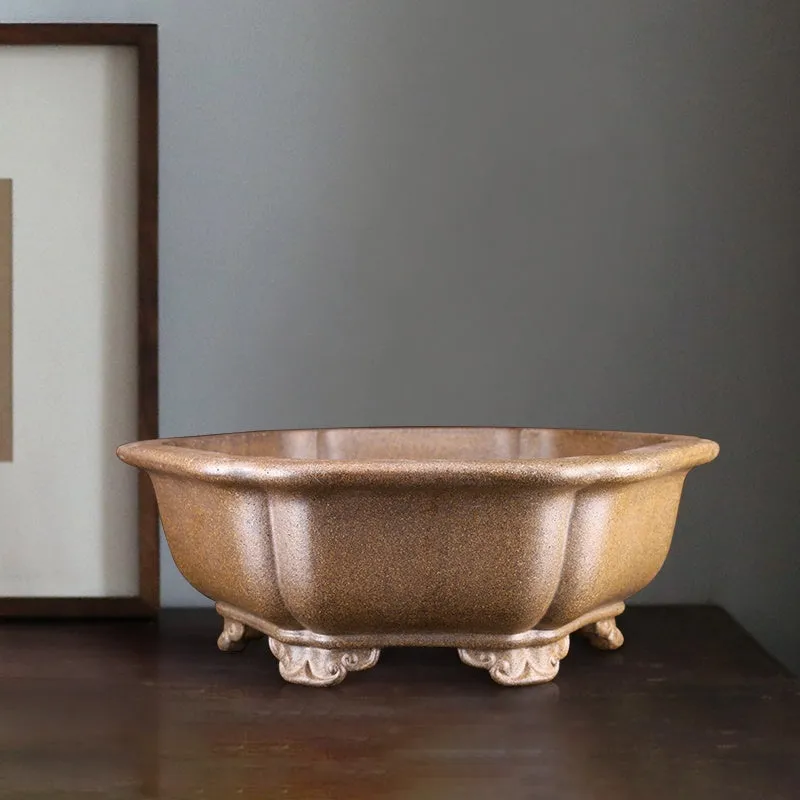
Large purple sand tea cultivation basin handmade from Pinus taiwanensis, classic hexagonal or begonia styles for optimal plant drainage and breathability in horticultural use


Large purple sand tea cultivation basin handmade from Pinus taiwanensis, classic hexagonal or begonia styles for optimal plant drainage and breathability in horticultural use
Handmade purple sand cultivation basin in hexagonal or begonia styles for tea plants

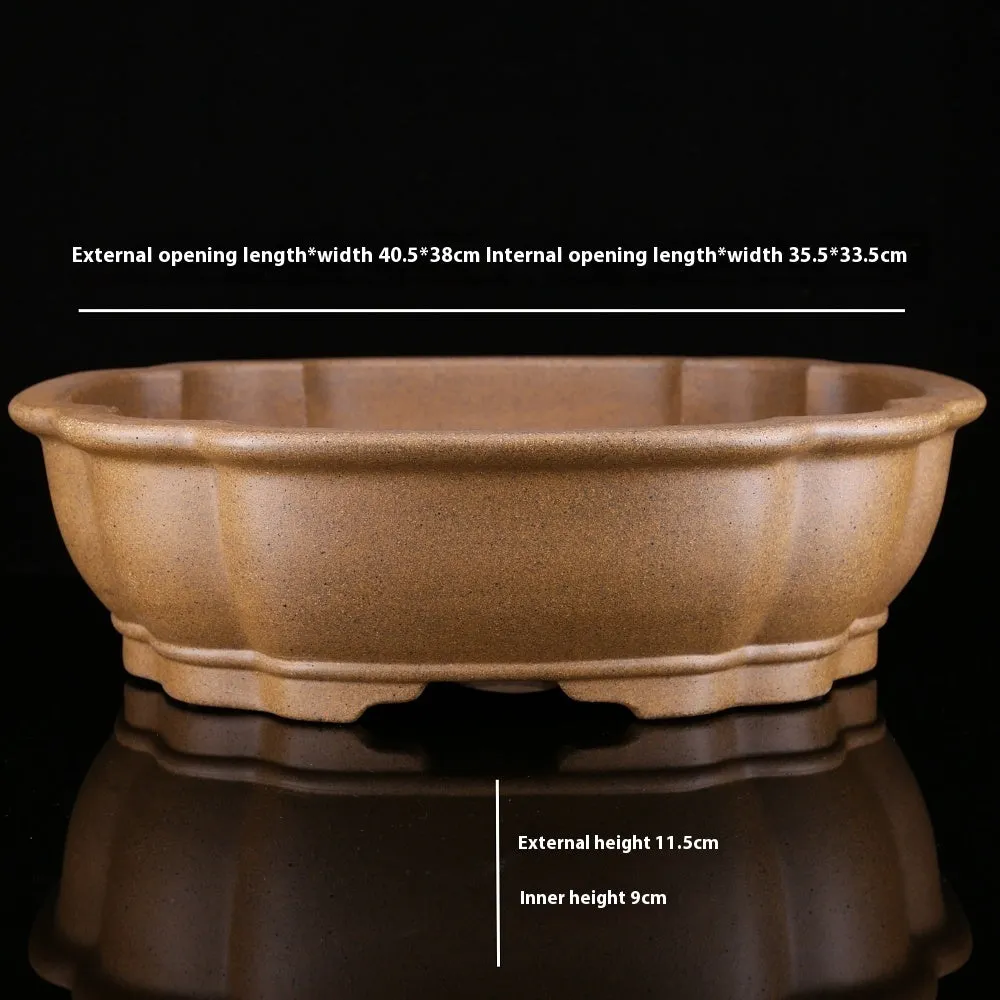
This large cultivation basin crafted from purple sand clay offers gardeners and tea enthusiasts a functional foundation for plant cultivation. The handmade construction using traditional techniques provides a sturdy planting vessel suitable for various horticultural applications. With two distinct style options available—the large hexagonal basin and large begonia basin—this product accommodates different aesthetic preferences and spatial arrangements. The purple sand material's natural properties contribute to practical gardening benefits, including improved soil aeration and moisture management. While specific measurements are not detailed in the available information, the basin's substantial size designation indicates suitability for mature plants or specimen displays.
Features and Construction

The basin's construction centres on traditional craftsmanship techniques and material properties that support plant health. Each piece is individually produced through manual methods rather than mass manufacturing processes.
Material and Build
Purple sand clay forms the basin's structure, providing natural porosity that allows air exchange with plant roots. This breathability helps prevent soil compaction and supports healthy root development. The material's resistance to deformation maintains the basin's shape over time, even with regular watering cycles and outdoor exposure. Corrosion resistance extends the product's usable lifespan in garden environments where moisture and soil minerals are present. The handmade production method allows for individual attention to each basin, though specific craftsmanship details beyond the manual technique are not specified.
Size and Practical Fit
Available in large sizing for both style variations, this basin accommodates established plants or those requiring substantial root space. The hexagonal and begonia shapes offer different spatial efficiencies—the hexagonal basin provides six equal sides for symmetrical arrangements, while the begonia style features a more organic, flowing form. Gardeners can select based on their display preferences, available space, or aesthetic considerations. Both options share the same large size designation, suggesting comparable planting capacity despite their differing shapes. The basin's substantial dimensions make it suitable as a standalone feature piece or within larger garden compositions.
Uses and Placement
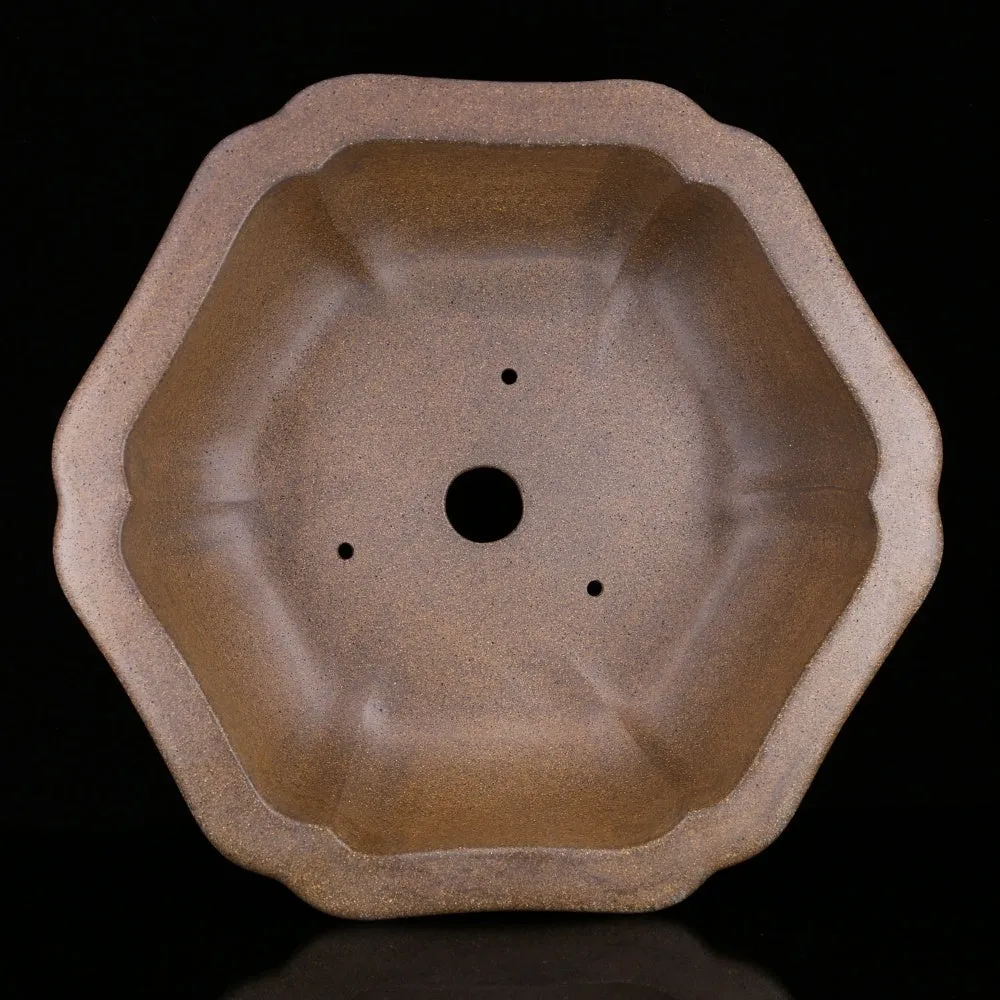
This cultivation basin serves multiple gardening applications, from specialised tea plant cultivation to general horticultural use. Its material properties and construction support various planting scenarios.
Event or Professional Use
For professional horticulturists or tea cultivators, the basin's breathable properties support optimal plant health in cultivation settings. The corrosion resistance makes it suitable for long-term use in commercial growing operations or botanical displays. Event organisers might employ these basins for temporary plant exhibitions or garden shows, where their handmade appearance and traditional craftsmanship add aesthetic value. The two style options allow for coordinated displays—using matching hexagonal basins for formal arrangements or mixing styles for more naturalistic presentations. While not specified for commercial use specifically, the durable construction supports repeated handling.
Everyday Home Use
Home gardeners benefit from the basin's water conservation properties, which help manage watering frequency and reduce waste. The drought resistance characteristic supports plants during periods of reduced watering or in climates with seasonal dry spells. Both style options integrate well with different home garden aesthetics—the hexagonal basin complements structured garden designs, while the begonia style suits more informal planting schemes. The basin's breathability reduces the risk of overwatering issues common with non-porous containers, particularly helpful for gardeners developing their watering skills. Its suitability for tea plants makes it ideal for enthusiasts cultivating Camellia sinensis or similar species.
Benefits and Buying Value
The basin offers practical advantages through its material properties and construction approach, providing value beyond basic containment functions.
Reuse and Low Maintenance
The deformation-resistant construction allows for multiple seasons of use without structural compromise. Corrosion resistance reduces maintenance requirements compared to metal containers that might rust or require protective coatings. The purple sand material naturally weathers with use, potentially developing a desirable patina over time rather than deteriorating. Gardeners can reuse the basin for successive plantings without concern about material breakdown from soil contact or moisture exposure. While specific cleaning instructions aren't provided, the material's durability suggests compatibility with standard garden container maintenance practices.
Why Choose This Product
This basin distinguishes itself through its handmade construction and material-specific benefits for plant cultivation. The purple sand clay offers natural advantages that synthetic materials cannot replicate, particularly regarding root zone aeration and moisture regulation. The two style options provide genuine choice between distinct aesthetic presentations rather than mere colour variations. Traditional manual production methods result in individual character for each basin, appealing to gardeners seeking unique pieces rather than identical mass-produced items. While premium features aren't explicitly claimed, the combination of material properties, craftsmanship approach, and functional design supports practical gardening success.