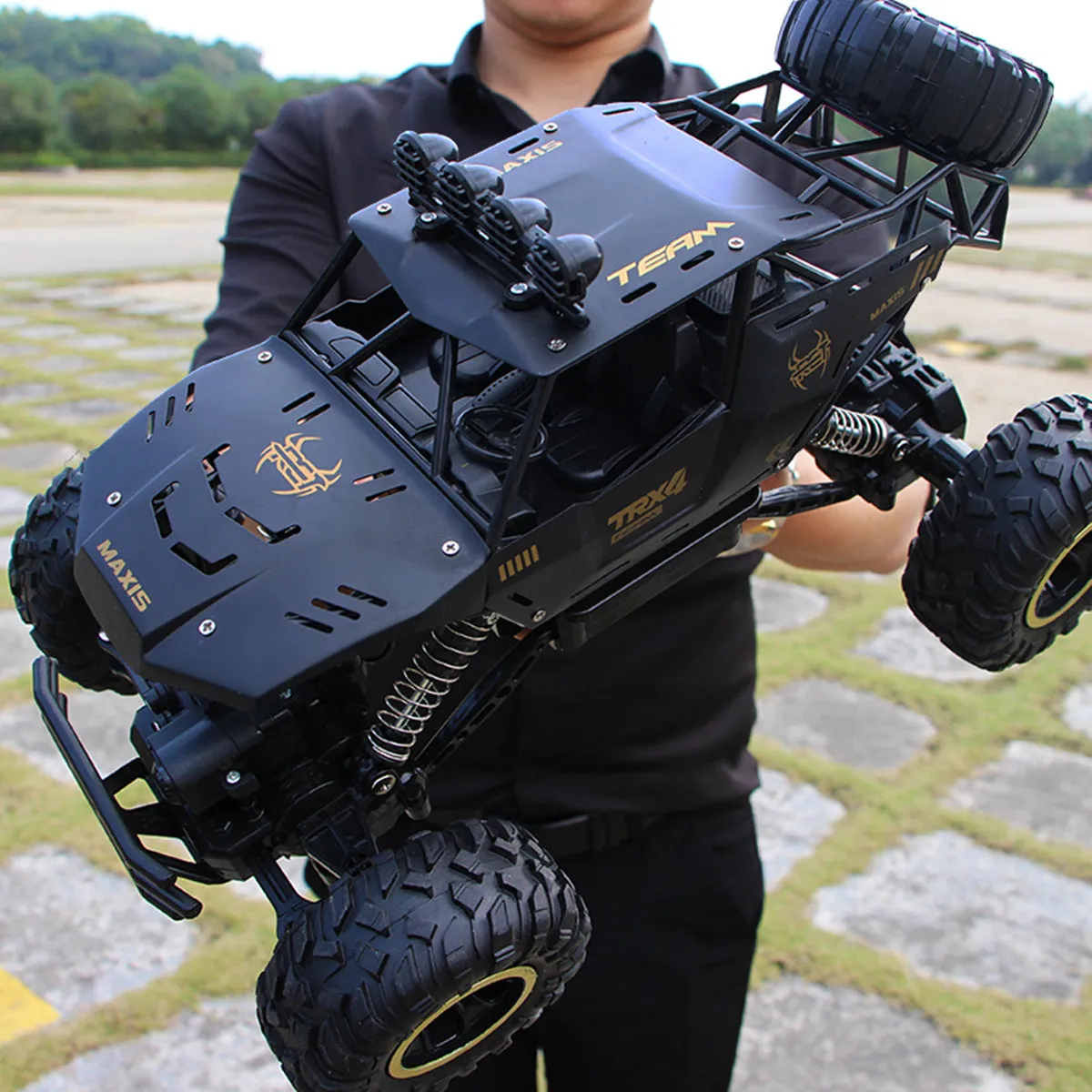
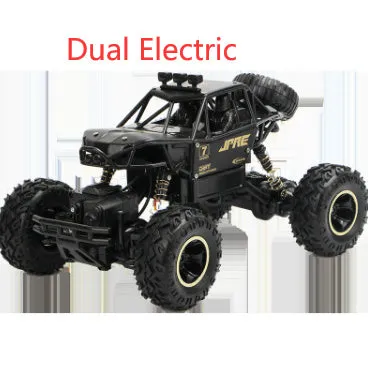
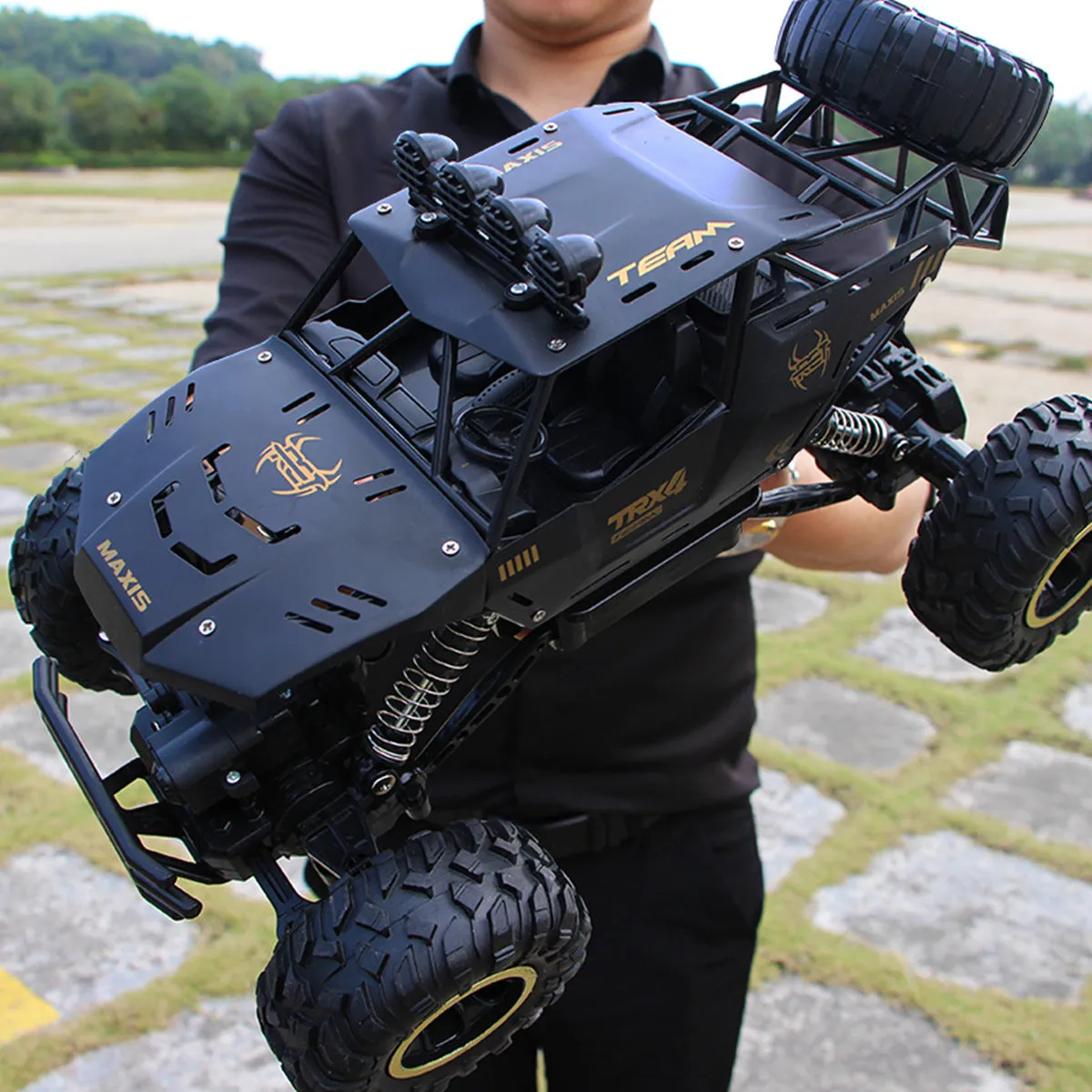
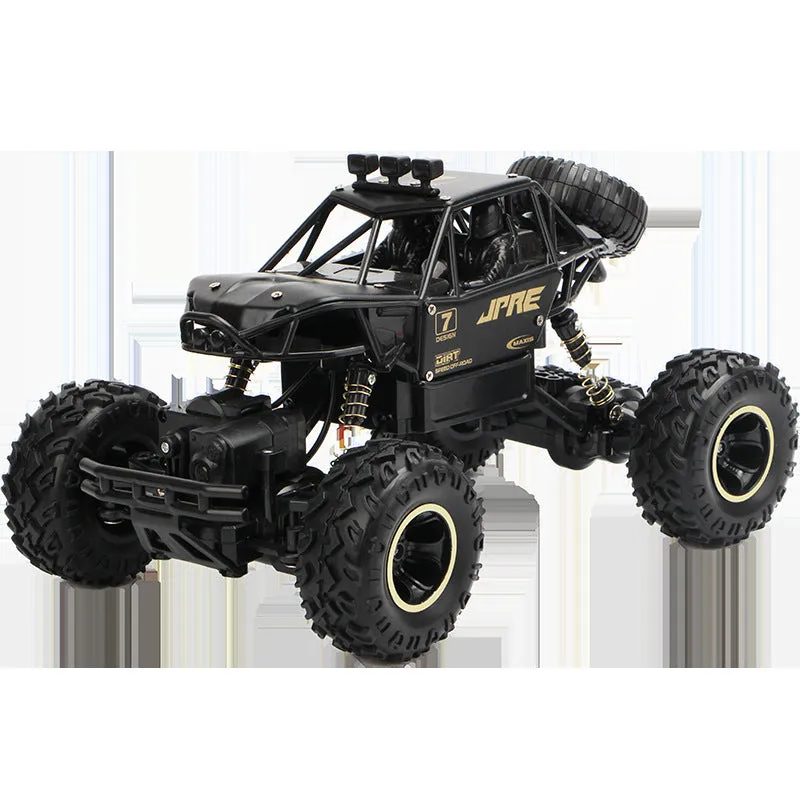
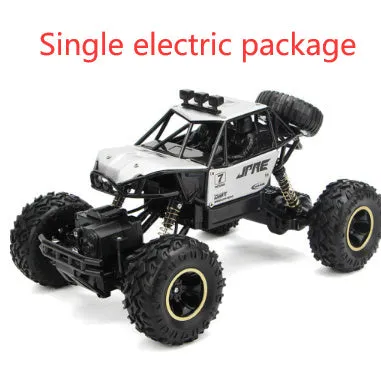
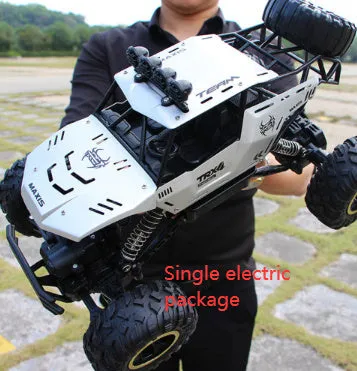
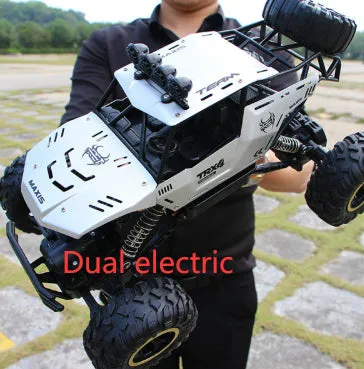
Large 4WD off-road climbing car 37 cm or 28 cm high-speed remote control car with 2.4G wireless remote control, four-wheel drive capability, ABS plastic construction, and choice of single or dual electric battery pack in black or silver colour


Large 4WD off-road climbing car 37 cm or 28 cm high-speed remote control car with 2.4G wireless remote control, four-wheel drive capability, ABS plastic construction, and choice of single or dual electric battery pack in black or silver colour
Large 4WD Off-Road Climbing Car with 2.4G Wireless Remote Control in Two Sizes
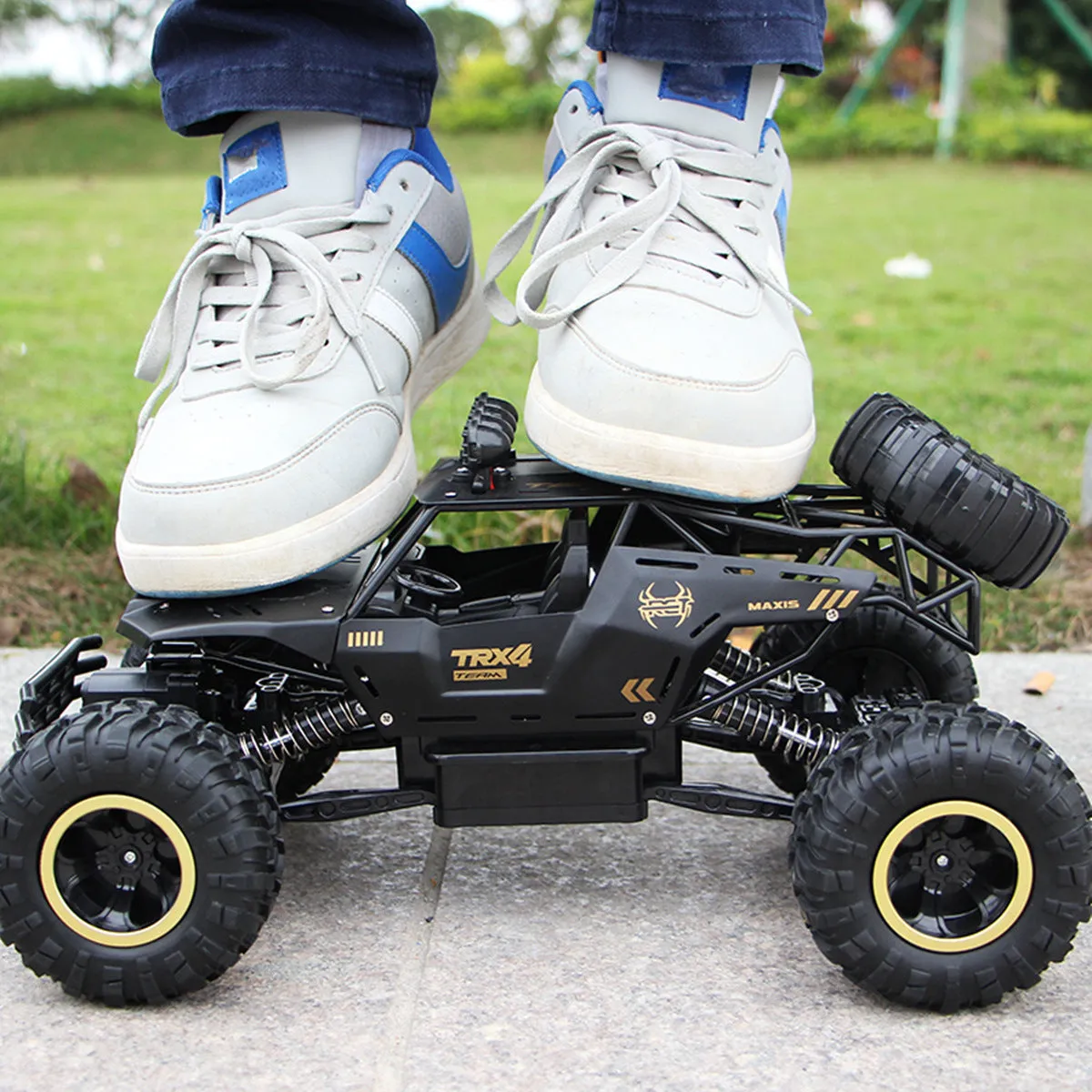
This radio-controlled 4WD off-road vehicle combines robust construction with responsive wireless control for challenging terrain navigation. Available in two distinct sizes – a 28 cm version and a larger 37 cm model – each climbing car features four-wheel drive capability powered by specific battery systems. The 2.4G wireless remote control provides stable operation with an approximate 100-metre range, while ABS plastic contributes to the body's structural integrity during climbs and high-speed runs. With driving speeds reaching around 130 metres per minute, these vehicles offer scale-appropriate performance whether you choose the more compact option or the substantial 37 cm off-road model. Each configuration includes the necessary power components, from the car's 4.8V rechargeable battery pack to the remote control's battery requirements, ensuring complete operational readiness straight from the packaging.
Features and Construction

The climbing car's design prioritises functionality for off-road use with measurable specifications guiding its performance. Two size options cater to different handling preferences, while the wireless control system maintains consistent operation within its stated range. Construction materials follow practical selections that support the vehicle's intended climbing and high-speed applications without unsupported claims about durability.
Material and Build
ABS plastic forms the primary body material, contributing structural support for the climbing car's framework and external shell. This material selection provides the necessary rigidity for the vehicle's off-road applications while housing the electronic components that enable remote control operation and motor functions. The construction approach focuses on integrating these electronic elements within the plastic bodywork, creating a unified assembly designed for the demands of four-wheel drive climbing and high-speed running. No additional material claims extend beyond the confirmed ABS plastic and electronic device components specified in the product information.
Size and Practical Fit
Two distinct size configurations allow users to select between a 28x18x16 cm model and a larger 37x23x20 cm 4WD off-road climbing car. These measurements reflect the external dimensions of each vehicle, influencing both handling characteristics and storage considerations. The size difference between models represents a tangible choice point – the smaller version may suit more confined spaces while the larger option provides greater physical presence. Packaging dimensions confirm individual unit packaging at 32x22x16 cm, with bulk outer boxes measuring 96x32x90 cm to accommodate multiple units. These practical measurements help determine storage needs and transportation requirements for both personal use and commercial distribution scenarios.
Uses and Placement

With its four-wheel drive system and climbing orientation, this remote control car targets specific operating environments that match its capabilities. The available size options further refine its appropriate applications, from more constrained spaces to open off-road areas. Performance parameters like the approximate 100-metre remote control distance establish realistic expectations for operational range during use.
Event or Professional Use
The climbing car's specifications support organised activities where off-road performance and wireless control reliability become important factors. The 2.4G remote control system helps prevent signal interference in multi-user environments, while the four-wheel drive capability enables navigation across uneven terrain that might challenge lesser vehicles. Event organisers can utilise the two size options to create varied course challenges, with the larger 37 cm model potentially serving as a centrepiece for demonstration runs. The stated driving speed of approximately 130 metres per minute provides a measurable performance benchmark for timing events or setting course difficulty levels. These concrete specifications create a foundation for structured activities without requiring unsupported claims about competitive advantages.
Everyday Home Use
For personal enjoyment, the climbing car offers straightforward operation with its complete battery systems and wireless remote control. The two size selections accommodate different available spaces – the 28 cm model may suit garden areas with more limited dimensions while the 37 cm version can utilise larger open spaces. Charging times of 120 minutes for the smaller car and 150 minutes for the larger model provide clear expectations for preparation before use. With an approximate 30-minute run time per charge cycle, users can plan sessions accordingly, while the 100-metre remote control distance supports operation across typical garden dimensions. These practical parameters establish realistic use patterns for home environments without inventing unsupported scenarios about longevity or performance.
Benefits and Buying Value

The climbing car's value emerges from its specific configurations and measurable performance characteristics rather than invented premium claims. Choice represents a central benefit – between two sizes, two colour options, and single versus dual electric packages – allowing users to select the combination matching their requirements. These selections come with confirmed specifications rather than vague promises, creating transparent expectations.
Reuse and Low Maintenance
The rechargeable battery system supports repeated use cycles, with the 4.8V battery pack powering multiple running sessions following proper charging. Separate power sources for the car body and remote control ensure that one component's battery status doesn't limit the other's functionality. The ABS plastic construction requires minimal maintenance beyond basic cleaning, while the electronic components follow standard operational patterns for radio-controlled vehicles. These practical aspects support ongoing use without inventing unsupported claims about reduced maintenance requirements or extended lifespan beyond the product's stated specifications.
Why Choose This Product
Selection focuses on tangible differentiators: the choice between 28 cm and 37 cm body sizes, the confirmed four-wheel drive capability, the 2.4G wireless remote control system with its approximate 100-metre range, and the option between single or dual electric packages. Each specification comes directly from the product information rather than invented advantages. The black and silver colour options provide visual distinction, while the measured charging times and running durations establish clear operational parameters. For buyers seeking a climbing-oriented remote control car with confirmed specifications rather than exaggerated claims, these concrete details create a foundation for informed selection based on actual product attributes.