
ESP8266 WiFi development board with Arduino compatibility, 11 digital I/O pins, 1 ADC input pin, onboard 5V 1A switching power supply supporting 24V max input, and OTA wireless upload functionality for IoT projects


ESP8266 WiFi development board with Arduino compatibility, 11 digital I/O pins, 1 ADC input pin, onboard 5V 1A switching power supply supporting 24V max input, and OTA wireless upload functionality for IoT projects
ESP8266 WiFi Development Board with Arduino Compatibility and 11 I/O Pins
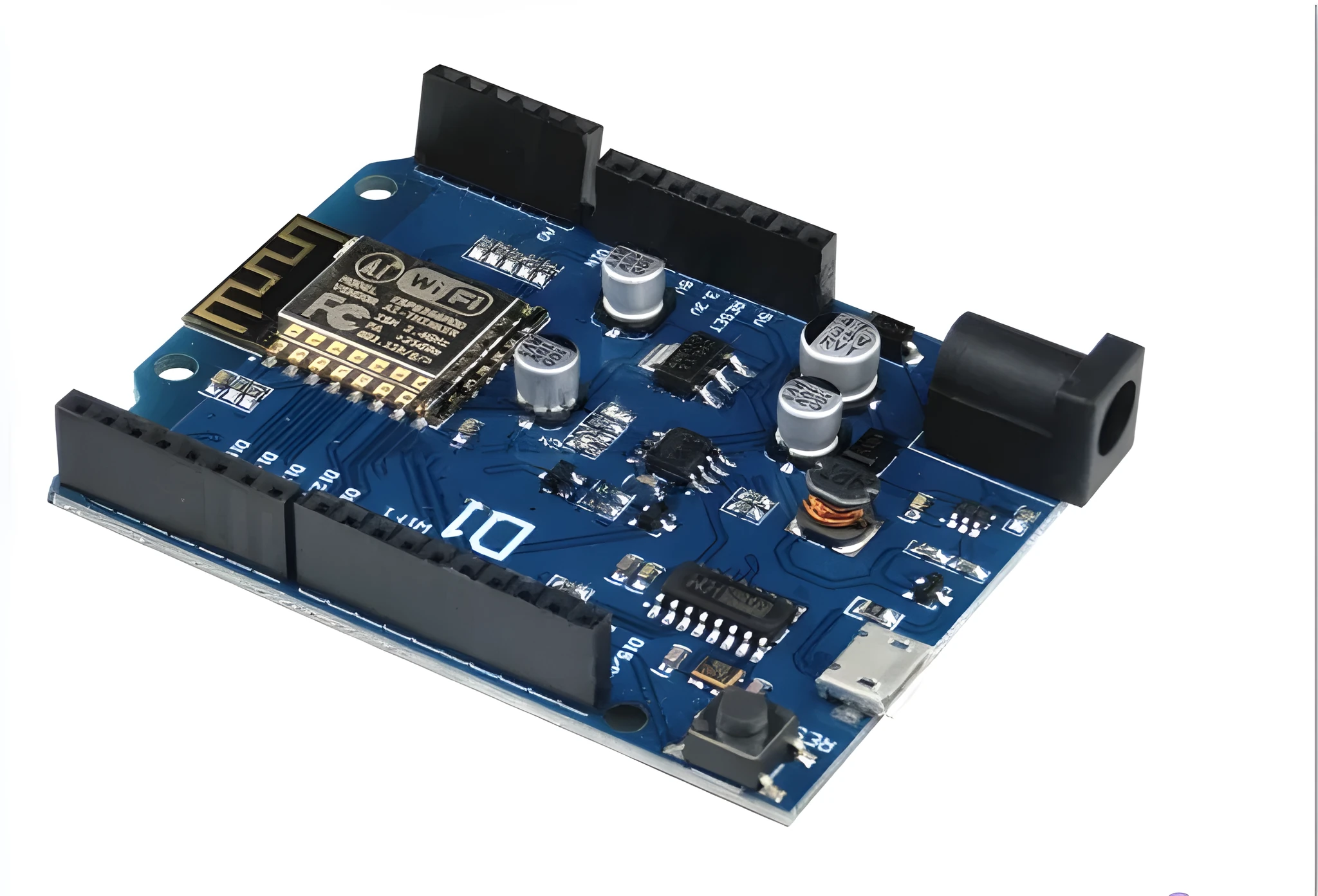
This ESP8266-based development board bridges the gap between traditional microcontroller projects and wireless connectivity needs. Based on the ESP-8266EX chipset, it provides integrated WiFi capabilities while maintaining compatibility with the familiar Arduino development environment. After installing the necessary hardware package, developers can work directly within the Arduino IDE, utilising a workflow similar to the Arduino UNO board. This approach reduces the learning curve for those already experienced with Arduino platforms while expanding project possibilities with wireless functionality.
Features and Construction

The board combines wireless connectivity with practical development features designed for Internet of Things applications and connected projects. Its construction centres around the ESP-8266EX microcontroller, which provides the WiFi capability while maintaining compatibility with the Arduino ecosystem.
Material and Build
Constructed with standard electronic components on a PCB board, this development board uses the ESP-8266EX as its core processing unit. The black colour option mentioned in the specifications refers to either the PCB solder mask colour or an enclosure finish. The board includes an onboard 5V 1A switching power supply that accepts input voltages up to 24V maximum, providing flexibility in power source selection for different project requirements.
Size and Practical Fit
While specific dimensions are not provided in the source material, the board's pin configuration and compatibility suggest a practical form factor for prototyping work. With 11 digital I/O pins available, it offers sufficient connectivity for sensors, displays, motors, and other peripheral components commonly used in Arduino projects. The single ADC input pin supports analogue readings within the 0-3.3V range, accommodating various sensor types and voltage levels compatible with the board's operating parameters.
Uses and Placement
This development board serves multiple application areas, from educational purposes to professional prototyping work. Its Arduino compatibility makes it accessible to a wide range of users, from hobbyists learning about IoT to developers creating connected devices.
Event or Professional Use
For workshops, hackathons, or educational settings, the board's familiar Arduino workflow reduces setup time and technical barriers. The OTA wireless upload capability allows for remote updates during development cycles, which can be particularly useful in distributed team environments or when devices are deployed in hard-to-reach locations. Professional developers can leverage the WiFi connectivity for IoT prototypes, smart home devices, or remote monitoring systems that require wireless communication without extensive radio frequency expertise.
Everyday Home Use
Home automation enthusiasts can utilise this board for creating custom smart devices that integrate with existing systems. The 11 I/O pins provide flexibility for connecting sensors to monitor environmental conditions, control relays for appliances, or interface with displays for status information. The onboard power supply's 24V maximum input accommodates various power sources, including wall adapters commonly available for electronic projects, making it practical for home workshop setups.
Benefits and Buying Value
The board offers specific advantages for developers seeking wireless capabilities within a familiar development environment. Its value proposition centres on reducing complexity while expanding project possibilities.
Reuse and Low Maintenance
The Arduino compatibility means existing code libraries, tutorials, and community knowledge can be applied directly to projects using this board. Developers can repurpose sketches written for other Arduino-compatible boards with minimal modification. The OTA wireless upload functionality reduces physical access requirements for programming updates, which can extend the useful life of deployed devices by enabling feature additions and bug fixes without retrieving hardware.
Why Choose This Product
This development board provides a practical entry point into WiFi-enabled projects without requiring extensive wireless protocol knowledge. The combination of Arduino familiarity with integrated WiFi addresses a common hurdle in IoT development. The onboard power supply with 24V maximum input offers power source flexibility, while the 11 I/O pins provide sufficient connectivity for most prototyping needs. For those needing to add wireless communication to projects while working within the Arduino ecosystem, this board delivers those capabilities in a single integrated unit.